Wednesday, September 16, 2026
Unlocking the Curriculum: How the Inclusive Mainstream Fund Can Bridge Literacy Gaps to Drive Universal Provision

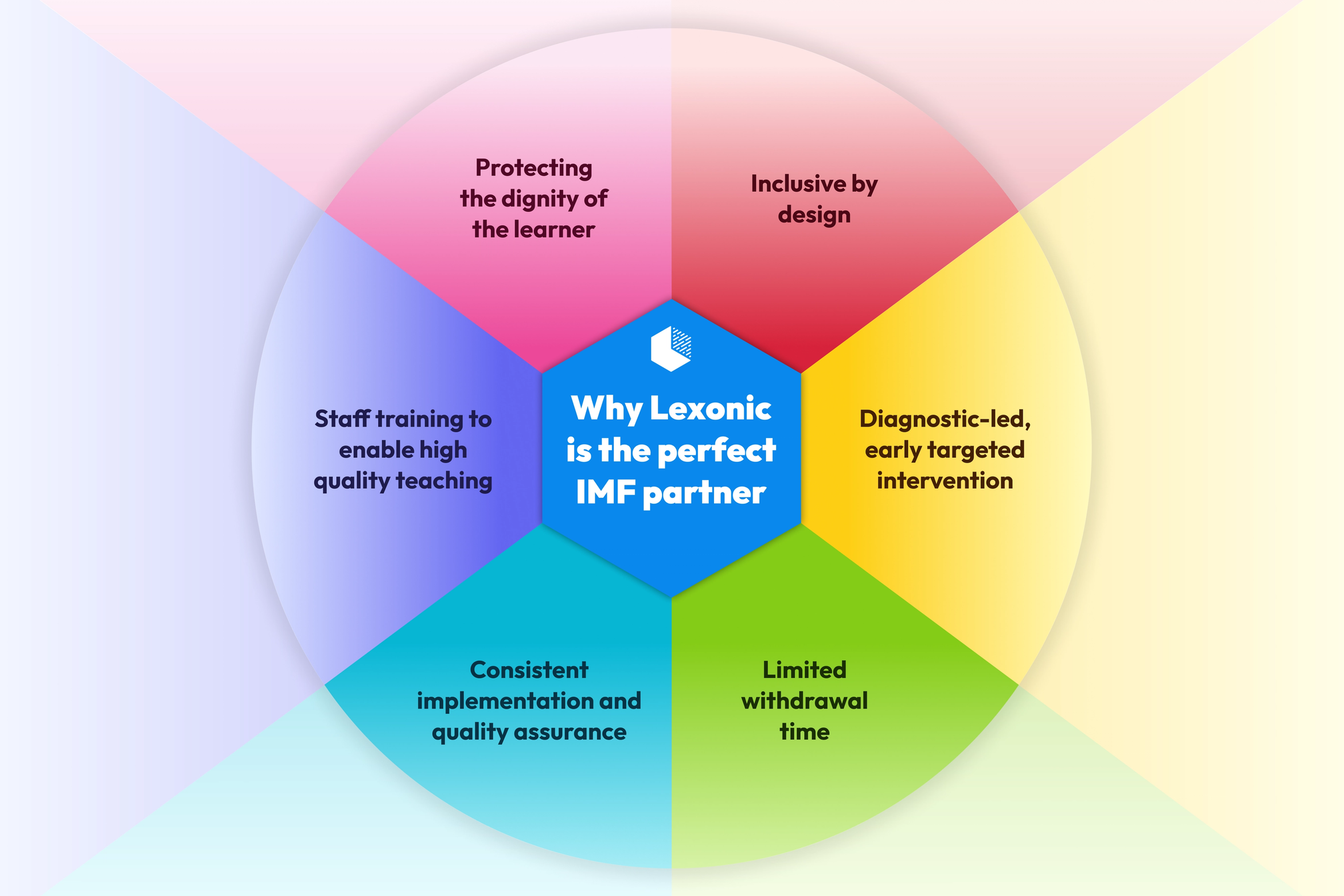
Inclusion in education has shifted from an ambition to an operational mandate. The DfE’s SEND reforms and the launch of the Inclusive Mainstream Fund (IMF) provide crucial financial backing for evidence-backed frameworks, with primary schools receiving around £14,000 on average and secondary schools around £48,000. However, funding without a grounded pedagogical strategy risks being spent on reactive fixes. True inclusion requires a literacy strategy that bridges reading gaps so every learner can access universal provision in the mainstream classroom.
How Lexonic Supports the Principles of Inclusive Practice
1. Inclusive by Design
Rather than pulling struggling learners into simplified, low-level texts, Lexonic focuses on equipping learners with transferable decoding tools so they can engage directly with mainstream curriculum content. Strategies in both Lexonic Leap and Lexonic Advance feed straight back into quality-first classroom instruction, bridging the gap between targeted adaptations and universal provision.
2. Diagnostic-Led, Early and Targeted Support (Not Waiting for a Diagnosis)
To make universal access possible, schools must intervene before minor gaps turn into entrenched academic barriers. Being diagnostic-led from day one means using precise baseline assessments to isolate specific skill deficits immediately, not waiting for a formal clinical diagnosis or EHCP process. By pinpointing exact gaps in sound-letter knowledge, decoding, and vocabulary, Lexonic Leap (foundational phonics) and Lexonic Advance (fluency and vocabulary) deliver immediate, targeted instruction. Matching the exact product tier to the learner’s specific deficit allows leaders to deploy IMF funding for small-group support without delay. In an independent evaluation by the National Literacy Trust (NLT), participating Advance learners' mean standardised reading scores rose from 94.5 to 106.0 post-intervention, remaining at 105.8 months later.
3. Limited Withdrawal Time
Protecting access to the wider curriculum requires prioritising intensity over duration and minimising time spent outside the mainstream classroom. Independent research from Northumbria University confirms that Lexonic Advance delivers an average reading age gain of 27 months in just six 1-hour sessions. For Lexonic Leap, short 15–20 minute sessions three times a week prevent cognitive overload and build automaticity based on Cognitive Load Theory, keeping learners where they belong: engaged in mainstream learning.
4. Consistent Implementation and Quality Assurance
A stand-out feature of Lexonic is ensuring consistent implementation and quality assurance across whole schools and multi-academy trusts. Inclusive practice fails if support quality varies by classroom. Structured, step-by-step instructional frameworks across Leap and Advance guarantee consistent, high-quality delivery regardless of who leads the session. Combined with digital progress tracking, leaders gain the exact oversight needed to verify fidelity under IMF quality assurance guidelines.
5. Staff Training to Enable High-Quality Teaching
Achieving consistency long-term means focusing on staff training to enable high-quality teaching rather than relying on external fixes. By upskilling teachers and TAs in explicit phonics (Leap) alongside metacognition, morphemic analysis, and fluency (Advance), Lexonic builds permanent internal capability. The NLT noted this professional development significantly improves broader classroom teaching across all subjects.
6. Protects the Dignity of the Learner
A core principle of Lexonic is that it protects the dignity of the learner at every stage. Struggling with reading as an older learner can erode self-esteem and lead to disengagement. Both Leap and Advance protect learner dignity using fast-paced, age-neutral methodologies free from juvenile graphics or infantilising content. Designed like high-level cognitive coaching, sessions build rapid progress and self-belief, shifting a learner's identity from a "struggling reader" to an empowered learner.
Getting Inclusion Right from the Start
For schools reviewing their Inclusion Strategy or planning their Inclusive Mainstream Fund allocation, the Lexonic team provides direct support. Connect with the team today to explore how Leap and Advance can build lasting, meaningful inclusion across your trust or school.
Ready to empower learners? Start your new literacy journey today.
Equip learners with essential reading skills and a rich vocabulary for lifelong success.